


AI Agents Explained: From Copilots to Virtual Workers

Agentic Assets Research Team
AI Solutions Architect
April 22, 2025
6 min read
From chatbots that draft emails to autonomous agents that close tickets while you sleep, AI is crossing the threshold from conversation to action. If the phrase “AI agent” still feels hazy, this explainer will anchor the concept, map the emerging taxonomy, and show why businesses are racing to deploy agents across entire value chains.
Defining the AI Agent
An AI agent is a software entity with enough reasoning, memory, and tool‑use to act on behalf of a human or system. It interprets a goal in natural language, decomposes that goal into tasks, selects appropriate tools (APIs, browsers, or shell commands), executes, monitors results, and iterates until done. Large‑language models supply the linguistic intelligence, but specialist models often join the party to make domain‑specific decisions.
A Tour of Agent Types
McKinsey groups production‑ready agents into five overlapping buckets:
- Copilot agents that augment an individual, think Microsoft 365 Copilot helping you summarize a meeting.
- Workflow orchestrators that stitch together multistep business processes, such as Salesforce’s forthcoming Agentforce.
- Domain‑native solutions that embed AI at the core of a vertical, e.g., autonomous customer‑service desks.
- AI‑native operating models where the entire enterprise is re‑architected around fleets of agents.
- Virtual workers, agents hired like employees, paid in compute cycles instead of salaries.
Most firms will mix and match: roll out personal copilots first, then automate high‑friction workflows, all while piloting a few virtual workers in non‑critical roles.
How Agents Actually Work
Behind the chat UI lives a multi‑agent system resembling a project team. A manager agent receives the user request, drafts a plan, dispatches specialist subagents, and evaluates their outputs. Subagents might search corporate wikis, call pricing APIs, or write SQL. Feedback loops, critic agents, and escalation policies keep the system on track and mitigate hallucinations. Because agents can call the same human tools we do, web browsers, spreadsheets, code repos, they integrate with legacy architectures instead of demanding wholesale rewrites.
The Business Upside
McKinsey estimates that generative‑AI use cases could unlock up to $4.4 trillion in annual value. Early deployments validate the hype: Lenovo reports 15 percent productivity gains for software engineers and double‑digit improvements in call‑handling time. Customer‑service agents tested by McKinsey clients resolved issues 14 percent faster and shaved 9 percent off average handle time, boosting both satisfaction and margins.
Beyond efficiency, agentic systems enable new capabilities. Imagine a loan‑underwriting agent that reasons across thousands of edge cases, or a modernization agent that rewrites COBOL into TypeScript overnight. When dozens of specialized agents collaborate, emergent behaviors surface, creative solutions no single model was explicitly programmed to deliver.
Implementation Hurdles
Trust, governance, and change management loom large. Users still prefer human support, so leaders must invest in guardrails that catch errors before they reach customers. Ethical audits, bias critics, and data‑loss prevention agents form the backbone of a secure deployment. Meanwhile, IT stacks will shift from monolithic apps to “multi‑agent fabrics”, a pattern where thousands of tiny services negotiate via natural language.
Success therefore hinges on three moves: scrutinize big‑ticket tech projects for agentic accelerators, attack the most expensive pain points first, and re‑skill talent for a world where prompt engineering and agent orchestration are core competencies.
Agents are moving from thought to action, will your organization keep up?
Ready to automate? Visit Agentic Assets for strategy and implementation support.
https://agenticassets.ai/blog/ai-agents-explained-business-impact
Sources
Share this article
Related Articles

Claude for Financial Services: Enterprise AI Platform Transforming Real Estate Finance in 2025
Discover how Anthropic's Claude for Financial Services is revolutionizing real estate finance through enterprise-grade AI agents, automated modeling, and seamless data integration, delivering proven 20% productivity gains across major financial institutions.
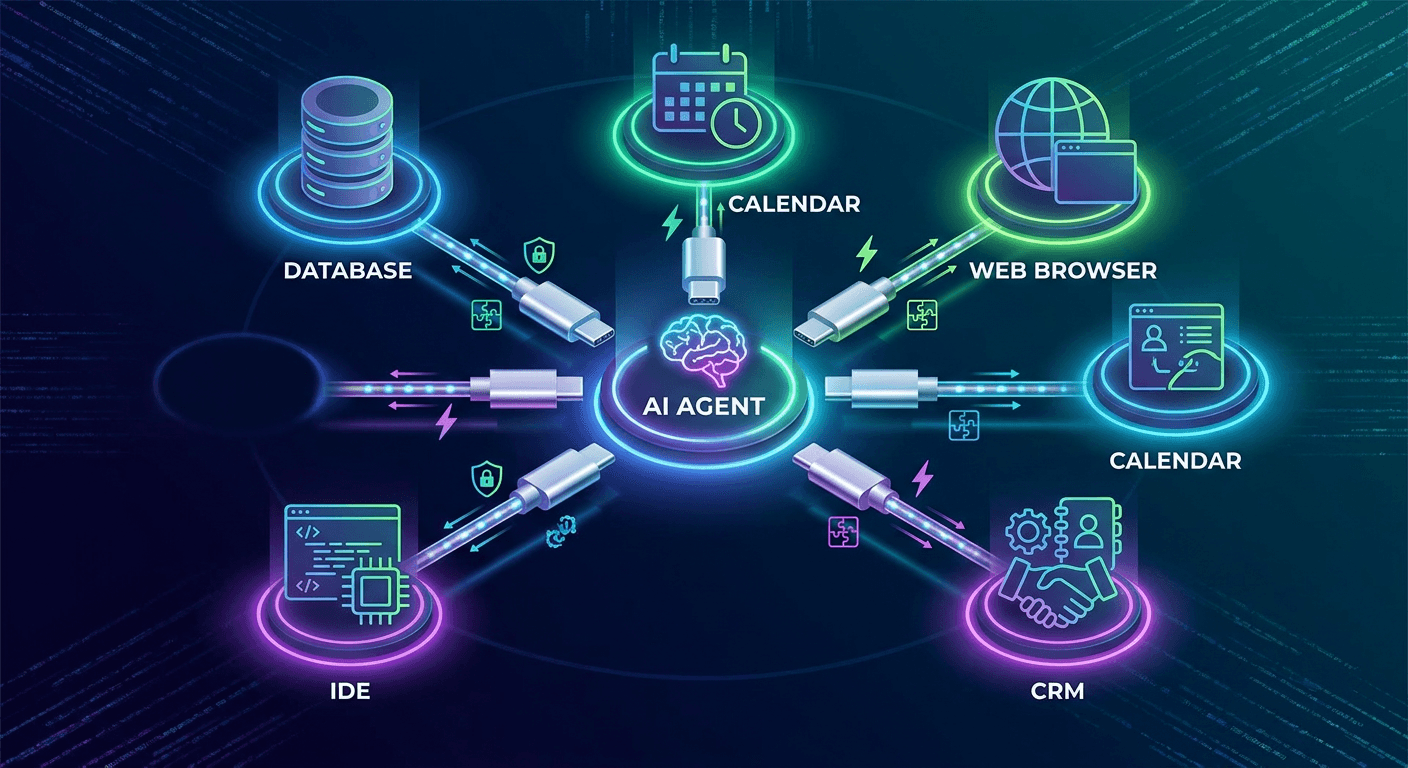
How the Model Context Protocol (MCP) Future-Proofs AI Agent Tool-Calling for Scalable, Secure, Interoperable Workflows
The Model Context Protocol (MCP) is redefining AI agent integration with a standardized, open approach, solving the complexity, security, and scalability challenges that have plagued previous tool-calling paradigms. Discover how MCP’s architecture and protocol enable robust, interoperable workflows that empower enterprise automation and innovation.

Multi-Agent AI Systems: Transforming Real Estate Finance with $34B in Projected Efficiencies
Discover how multi-agent AI systems are revolutionizing institutional real estate finance, with Morgan Stanley projecting $34B in operational efficiencies by 2030 through advanced automation and orchestrated workflows.